
Lead-Safe Window Replacement for Pre-1978 Homes in Dayton
If your house was built before 1978 and you are paying someone to replace windows, federal law requires that company to be an EPA Lead-Safe Certified Firm and to follow lead-safe work practices. In the Dayton area that covers most homes. Old windows are one of the most common places lead paint is found, because sashes rub against painted jambs every time they open and close.
This guide explains the EPA Renovation, Repair and Painting (RRP) rule as it applies to windows, why window replacement does not fall under the "minor repair" exception, how the rule is enforced in Ohio, and what to ask an installer before you sign.
General information, not legal advice. The source for everything here is the EPA Renovation, Repair and Painting Program. For questions about your own home, contact EPA or a qualified professional.
How many Dayton-area homes were built before 1978?
The Census does not report a 1978 cutoff exactly. It groups homes by decade, so "built before 1980" is the closest stand-in. Using American Community Survey 2020–2024 estimates:
| Place | Median year built | Built before 1980 |
|---|---|---|
| Dayton (city) | 1951 | 85.4% |
| Oakwood | 1938 | 96.9% |
| Kettering | 1961 | 85.5% |
| Xenia | 1971 | 71.4% |
| Huber Heights | 1976 | 61.9% |
| Centerville | 1977 | 57.5% |
| Montgomery County overall | 1966 | 73.6% |
Source: U.S. Census Bureau, ACS 2020–2024 5-year estimates via Census Reporter. In other words, if you live in Dayton, Oakwood or Kettering, it is more likely than not that your home falls under the rule. Check your county auditor record for the year your house was built.
What does the EPA RRP rule require?
The rule applies to firms paid to do work that disturbs painted surfaces in housing built before 1978 and in child-occupied facilities. According to EPA:
- The firm must be EPA-certified. That applies even to sole proprietors.
- Work must be done or directed by a certified renovator who has taken EPA-accredited training.
- Lead-safe work practices are required: containing the work area, limiting dust, and cleaning up thoroughly before the area is used again.
- Homeowners must get information first. Before work starts, the firm is required to give you EPA's Renovate Right pamphlet.
Homeowners doing work on their own owner-occupied home are generally not covered by the rule. That is an exemption for you, not for anyone you hire.
Is window replacement exempt as a "minor repair"?
No. The RRP rule has a minor repair and maintenance exemption for small jobs: disturbing less than 6 square feet of painted surface per room inside, or less than 20 square feet outside. EPA has stated that window replacement does not qualify for that exemption, no matter how small the window. Pulling out an old window disturbs painted stops, jambs and trim.
Some smaller window repairs, such as replacing a cracked pane or a balance, may stay under the threshold. But when painted glazing or sashes are removed, the work usually counts. If a company tells you a full window replacement is "too small" to need lead-safe practices, that is a reason to keep shopping.
Who enforces the rule in Ohio?
Some states run their own RRP programs. Ohio is not one of them, so EPA administers the RRP program directly in Ohio. A contractor working in Dayton, Kettering or Oakwood needs EPA firm certification, not a separate state lead certificate for this purpose. You can look up certified firms on EPA's website.
Separately, Ohio has no statewide license for residential window installers. That makes the EPA certification one of the few checkable credentials on a window quote, so it is worth asking for.
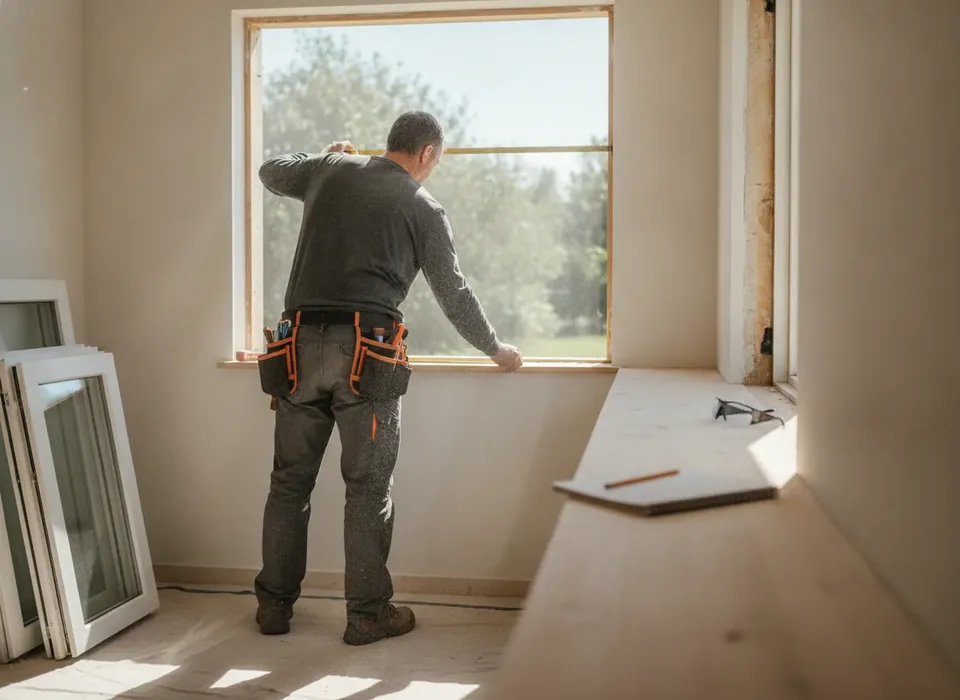
What lead-safe window work looks like on install day
Every certified firm sets up a little differently, but you should generally expect to see:
- Warning signs posted at the work area and people and pets kept out.
- Plastic sheeting on the floor inside, and on the ground outside below the window.
- Furniture moved out of the way or covered and sealed.
- No open-flame burning of paint and no power sanding or grinding without proper dust collection.
- Debris bagged and sealed before it leaves the room.
- HEPA vacuuming and wet cleaning at the end, followed by a cleaning check before the area is released back to you.
Lead-safe practices take extra time and materials, so they can add to the cost per window. That cost belongs in the written quote, not as a surprise later. Our Dayton window replacement cost guide lists lead-safe work among the main cost drivers.
Questions to ask an installer about lead-safe work
Is your company an EPA Lead-Safe Certified Firm?
Ask for the firm certificate number and check it on EPA's site.
Who is the certified renovator on my job?
Ask whether that person will be on site or directing the crew.
How will you contain dust inside and outside?
Listen for specifics: sheeting, sealed doorways, cleanup steps.
Is lead-safe work included in the price?
Make sure it is written into the quote, so quotes can be compared fairly.
Will I get the Renovate Right pamphlet and job records?
Certified firms are expected to keep records of how the rule was followed.
The window replacement process page walks through where these questions fit, from the in-home measure to the final walk-through.
Does lead-safe replacement change what kind of window to choose?
Not directly, but it does affect the install method. A full-frame replacement removes more of the old painted frame and trim, so it disturbs more paint than an insert installed inside the existing frame. Both can be done lead-safe. See full-frame vs insert window replacement for how installers choose. In a historic district, there are also design rules to follow, covered in our Dayton historic district window guide.
What if you have children or are pregnant?
Lead dust is most dangerous to young children and during pregnancy. If either applies, tell the installer before work starts, ask about keeping the household out of the work area, and consider talking with your doctor or the health department about testing. EPA's lead pages list more resources.
Before you sign. Ask each installer for proof of insurance, EPA Lead-Safe Certified Firm status for pre-1978 homes, and any local registration your city requires. Dayton Window Replacement Pros is a free matching service, not a window company, and does not verify licenses, certifications or insurance. If you sign at home, Ohio law (ORC 1345.22) and the FTC Cooling-Off Rule generally give you until midnight of the third business day to cancel in writing.
When you request quotes through our free quote form, mention the year your home was built. It helps independent local installers price lead-safe work into their quotes from the start.
Questions people ask
Does window replacement require lead-safe practices in a pre-1978 home?
Yes, when a paid contractor does the work. EPA's RRP rule requires an EPA Lead-Safe Certified Firm, and EPA says window replacement is not covered by the minor repair and maintenance exemption.
Who runs the lead RRP program in Ohio?
EPA. Ohio is not an RRP-authorized state, so EPA administers the program directly for work in Dayton and the rest of Ohio.
Can I replace my own windows without lead certification?
Homeowners working on their own owner-occupied home are generally not covered by the RRP rule. EPA still recommends lead-safe practices, especially with children in the home.
Does lead-safe work cost more?
It usually adds some time and materials per window. Ask each installer to include it in the written quote so quotes can be compared fairly.